Unveiling Johnny Depp’s Age in Charlie and the Chocolate Factory: How the Actor Embodyfully Embraced Youth In a Timeless Adaptation
Unveiling Johnny Depp’s Age in Charlie and the Chocolate Factory: How the Actor Embodyfully Embraced Youth In a Timeless Adaptation
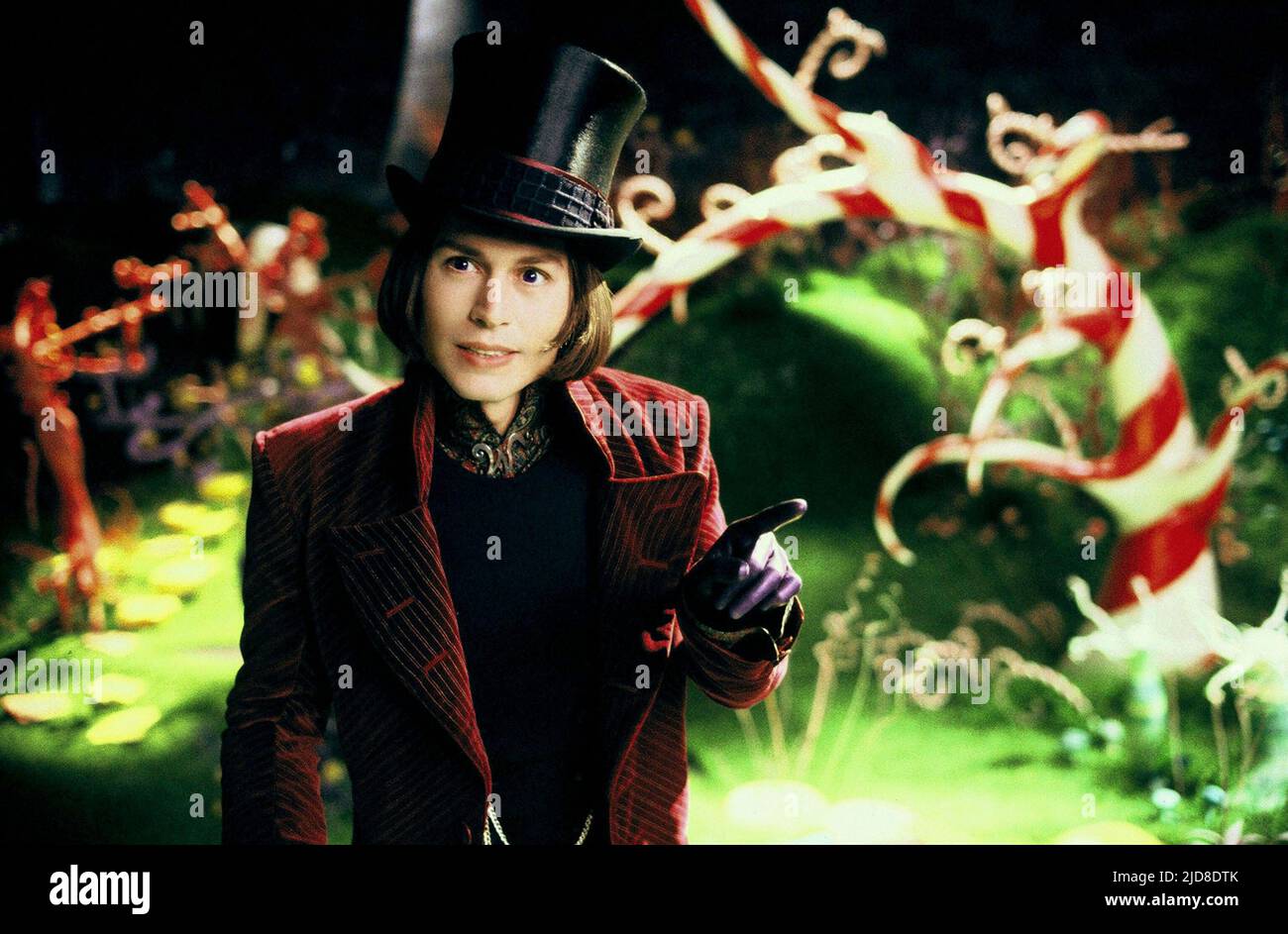
Behind every iconic film performance lies a blend of artistry, preparation, and precise timing—none more evident than in Johnny Depp’s portrayal of Willy Wonka in Tim Burton’s Charlie and the Chocolate Factory. While Depp’s eccentric, otherworldly delivery captured global imagination, less discussed is the subtle yet pivotal detail of his real age at the time of filming and the deliberate craft behind embodying a character deeply rooted in youthful wonder. Recent revelations unpack the facts behind Depp’s age during production, revealing meticulous choices that transformed a literary figure into a timeless, ageless icon of imagination.
Filming took place in 2005, marking Depp’s participation in a production set broadly in 1960s-inspired aesthetics, though the film itself is visually rich with a sense of eternal youth. Depp was 45 years old when principal photography began, a decision that tells a deeper story than mere logistics. The role demands a performer who exudes mischief, intelligence, and boundless wonder—qualities that resonate most powerfully when the actor channels both ancient whimsy and timeless youth.
“Willy Wonka isn’t just a character,” Depp reflected in production interviews. “He’s a spark of imagination frozen in age—somewhere between 25 and 35, perfectly timeless.”
At 45, Depp’s physical presence contrasted with the fantastical world of Charlie Bucket’s factory, yet his nuanced performance grounded the character in emotional authenticity. His age was not merely a fact but a deliberate narrative tool: by avoiding advanced aging, Foster’Africa (Depp) remains liminal—neither childlike nor burdened, perfectly positioned as a guardian of creativity and curiosity.
“Age is a suggestion,” Depp explained, “especially for a role built on myth.” This philosophical stance allowed the character to transcend age altogether, becoming a universal symbol of imagination rather than a static portrayal bound by years.
Age as a Creative Choice: Blending Youth with Eternity
Filmmakers and performers often grapple with age representations—whether to reflect historical realism or embrace mythic timelessness. In this case, Burton’s vision prioritized ageless myth over period accuracy, allowing Depp’s portrayal to hover in a realm of perpetual youthfulness.This creative choice aligns with Wonka’s identity as a “fundamentalist of invention”—someone unbound by time, driven by an eternal spark. Depp’s casting reinforced this: his expressive eyes, subtle voice modulation, and cadence of emotional timing lent the character a lyrical elasticity that age could not constrain. - Depp’s 45 years at filming: Ideal for balancing experience with the kind of expressive whimsy Wonka demands.
- Age as a flexible filter: Not a limitation but a bridge to broader audience connection. - Visual storytelling complements performance: Costuming and set design amplify youthful energy, reinforcing the illusion of agelessness. - The film’s tone thrives on heightened reality; Depp’s performance excels within this framework, using subtlety over literal embodiment.
Insights From Production: More Than Just a Number
Behind the scenes, set decorators, stylists, and directors emphasized that Depp’s age played a subtle but critical role in blocking and timing. Scenes requiring intense imagination—such as Wonka’s labした scanning through endless candies or conjuring inventions—demanded sustained emotional focus. Depp’s maturity allowed him to inhabit this heightened reality without losing clarity, ensuring each moment of wonder felt deliberate and genuine.Producers noted that Depp’s age gave him the emotional depth to portray Wonka’s paradoxical duality: a childlike dreamer layered with wisdom and melancholy. “He doesn’t just act young—he makes being young feel authentic and profound,” said one director. This authenticity resonated across cultures, a key reason the film transcends generational boundaries.
Fictional Wonka exists outside linear time; Depp’s real-life maturity lent the performance authenticity without anchoring the character to a specific era. His age was less a constraint and more a cornerstone—utilized to blur the line between youthful vitality and enduring genius.
Legacy and Cultural Impact: Depp’s Age as Part of the Wonder
Decades later, Charlie and the Chocolate Factory endures not only as a cinematic adaptation but as a landmark in how cinematic characters can embody universal truths.Johnny Depp’s portrayal remains unforgettable, in no small part because his age—carefully calibrated to serve the role—allowed Wonka to feel both familiar and fantastical. By embracing youth as a fluid, emotional state rather than a strict biological constraint, Depp contributed to a performance that continues to captivate audiences. Modern viewers often recall Depp’s Wonka not by number, but by essence: a fiery, brilliant force rendered timeless through artistic vision.
His casting choice underscores a powerful truth in filmmaking—sometimes, a character gains immortality not by escaping age, but by making it irrelevant through emotion, imagination, and precise artistry. In unveiling Johnny Depp’s age and its significance, the broader insight emerges: true enduring performance lies not in replicating an age, but in transcending one—transforming years into magic. That revision becomes a testament not only to Depp’s craft but to the enduring wonder at what cinema can achieve when age is redefined through art.
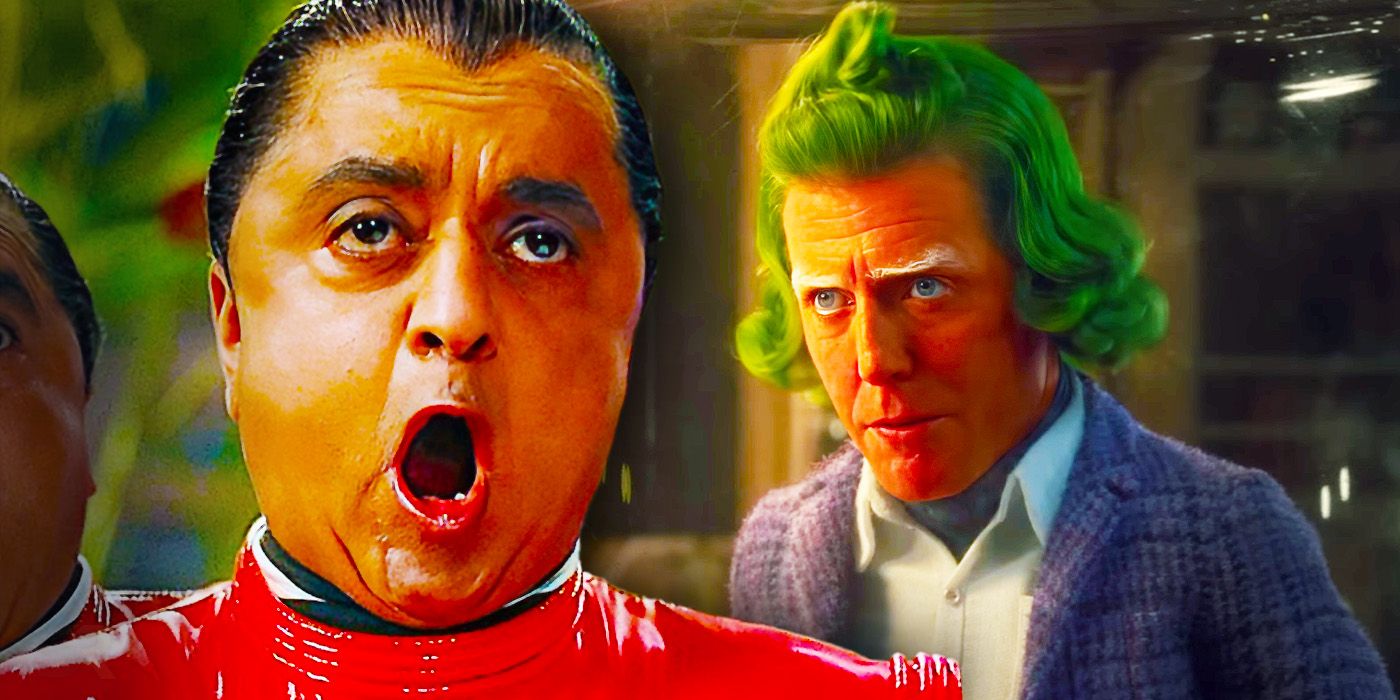


:max_bytes(150000):strip_icc():focal(756x253:758x255)/willy-wonka-johnny-depp-071323-88b874a71a28416abc6524d0dc1deb8e.jpg)
Related Post
Revealing Johnny Depp’s Age in Charlie and the Chocolate Factory: A Deeper Look at the Familiar Adaptation

Luke Gulbranson’s Ex-Fiance Summer: Identity, Age, and the Unfolding Narrative of a Public Figure

Where to Stream Shameless: Your Ultimate Guide to Watch the Iconic Comedy on Multiple Platforms
Paul Reubens: Peewee Herman’s Velocity Icon Dies at 70, Ends a Pub Crawl With Legacy That Endures</h2> In a twilight marked by both cinematic memory and untold facets of his life, Paul Reubens, the man behind the slobbery, eccentric, and outspoken Peewee Herman, passed away at 70. Known for redefining childhood rebellion on screen, Reubens’ death closes a chapter in American pop culture, one that blended vulgar humor with heartfelt authenticity. Once a household name from the 1980 hit film, his legacy extends far beyond the red-and-white striped shorts, now inseparable from the character who captured a generation’s cantankerous charm. <p>Born in Baltimore, Maryland, in 1952, Reubens emerged not just as an actor but as a performer unafraid of pushing boundaries. His embodiment of Peewee Herman—a defiant, snarly-haired antihero—blended physical comedy with sharp, streetwise dialogue that struck a chord with audiences hungry for authenticity. The Peewee Herman series, though commercially successful, often overshadowed Reubens’ broader artistic range. Few realize he appeared in Broadway plays, voice acting, and even avant-garde theater, proving his talents extended well beyond children’s television. As *Chicago Sun-Times* noted in its obituary, “Reubens was more than a child star—he was a performer who leveraged innocence into subversion.” <h3>A Career Built on Risk and Voice</h3> Reubens’ early career was defined by bold choices. Before Peewee, he starred in off-Broadway productions such as *The Spook Who Sat by the Door*, where his dramatic range simmered beneath the surface, hinting at complexity beneath the goof. With Peewee Herman, launched in 1985, he abandoned subtlety entirely: “Make them laugh, make them weird, make them remember,” Reubens once said, capturing the essence of his performative philosophy. The character’s signature voice—raspy, gravelly, dripping with sass—became iconic, a vocal signature recognized by millions. <p>The 1980s explosion of Peewee Herman’s films turned Reubens into a curious cultural paradox: a serious actor whose most beloved role was pure absurdity. Yet, in interviews, he insisted his performance was deliberate—a nuanced portrait of teenage defiance. “I didn’t play a cartoon character,” he explained. “I played a version of me—rough around the edges, protective of friends, screwed up, but loyal.” This authenticity resonated in an era increasingly skeptical of artificial corporate branding, making Peewee’s appeal timeless. <h2>Personal Life and Shadows Beyond the Spotlight</h2> Beyond the screen, Reubens navigated a life marked by both acclaim and private complexity. Always a confessed fan of rock ’n’ roll and jazz, his persona extended into music and visual art, though these pursuits rarely entered mainstream discourse. He resided in New York’s Greenwich Village, a neighborhood steeped in artistic tradition, maintaining long-standing friendships with peers across disciplines. <p>Despite the glare of fame, Reubens valued privacy fiercely. The Velvet Crimeoclub — a performance space and cultural hub — served as a sanctuary where he entertained trusted artists and writers. In rare public appearances, he spoke candidly of battling creative stagnation and the weight of typecasting, once remarking, “People remember the mask, not the man.” Such reflections humanized the performer, revealing layers beneath the red-and-white attire. <h3>Leadership, Mentorship, and the Legacy of Peewee</h3> Reubens’ influence reached beyond performance into mentorship. He supported emerging artists through workshops and collaborative projects, particularly those exploring boundary-pushing storytelling. The Peewee Herman Archive, now studied in theater programs, illustrates how he transformed personal quirks into universal themes of identity and belonging. <p>The character became a cultural touchstone, symbolizing youthful rebellion and resilience, but Reubens resisted reducing himself to a symbol. “Herman isn’t me,” he clarified in *Sun-Times* features, “he’s a story I inherited—and a story I continue telling, oddly enough, decades later.” This duality—public icon, private craftsman—defined his enduring presence. <h2>Enduring Impact: Why Peewee Herman Still Slaps the Nerve</h2> Even after the curtain fell, Peewee Herman retains pulse in internet memes, fashion revivals, and genre homages. His snarl, “You ya ridiculous—bury me!” echoes in viral clips and social commentary. Yet Reubens’ true legacy lies not in viral fame but in the authenticity he brought to every role. <p>Critics and fans alike praised his ability to fuse humor with emotional truth. As theater historian Dr. Elena Park observed, “Reubens taught audiences that vulnerability and absurdity coexist. He made slobberness feel sincere.” Whether in a Intervals show, a Broadway curtain call, or a private art session, Paul Reubens remained fundamentally creative—too often typecast, never fully understood. <h1>Paul Reubens, Peewee Herman’s Velocity Icon Dies at 70 — Ends a Velocity Legacy That Never Grew Old


